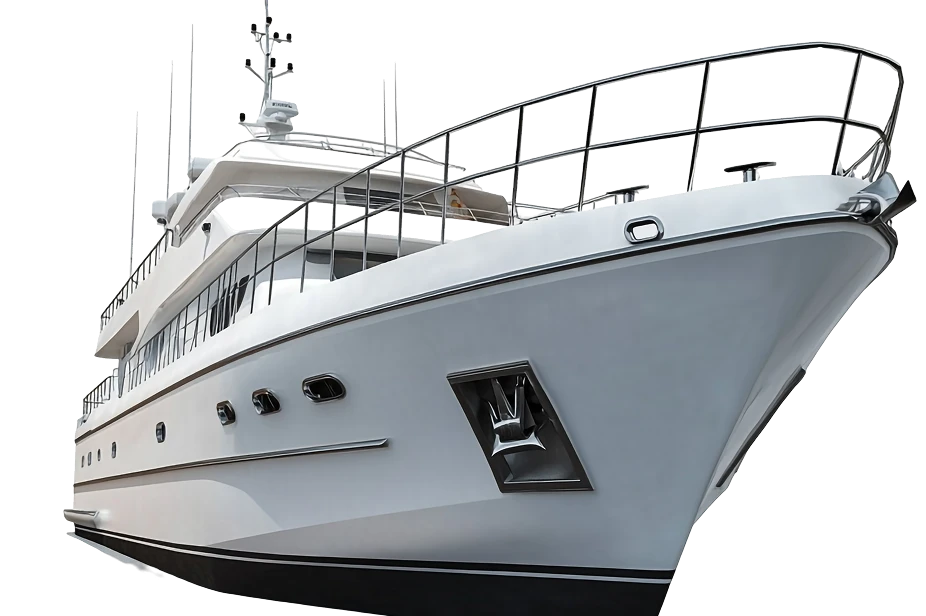
Superyacht Engineer Essentials Package
Everything you need to work as a yacht engineer. Safety training plus technical skills.
10 Days
12 OCT 2026
This all-in-one package gives you every required certification to start and grow as a yacht engineer. With both AEC1 and AEC2, you’ll be equipped for hands-on technical work and future progression. Including PDSD also qualifies you for engineering roles on ISPS-compliant vessels—essential for larger yachts, commercial support vessels, and global operations.
Junior engineers earn $4,000–$5,000/month, with higher offers for candidates from technical or industrial roles. Career growth is fast: experienced engineers can reach $6,600–$8,800+, making this one of the most rewarding long-term roles on board.
Includes personal survival, fire prevention, first aid, security awareness, and Proficiency in Designated Security Duties (PDSD) for roles on regulated vessels.
Learn diesel engine function, auxiliary systems, workshop tools, safety practices, and emergency response procedures.
Develop skills in fault diagnosis, system monitoring, hydraulics, fuel injection, and technical documentation.
Gain extensive hands-on experience with live components, tools, and fault simulations to reinforce technical theory.
18 years old
A good level of spoken and written English is required, as all training and assessments are conducted in English
Engineering packages are ideal for career changers from land-based technical roles, such as mechanics, electricians, technicians, or engineers.
They’re also suitable for crew planning to work on small vessels, yachts, and workboats where multi-skilled engineers are essential.
Yes. Many yacht engineers start from land-based mechanical or electrical backgrounds.
Engineering packages give you the marine-specific knowledge and certificates needed to make that transition safely.
STCW only covers safety and survival, not engineering ability. AEC1 and AEC2 formally certify that you understand marine engines and systems—fuel, cooling, electrics, lubrication, and maintenance—on paper. An engineering package combines STCW with AEC certification, giving employers proof, not assumptions, that you can work as an engineer.
Yes. On small yachts and commercial vessels, engineers often handle engines, generators, pumps, electrics, and maintenance.
This makes engineering one of the most secure and versatile career paths at sea.
Entry-level engineers typically earn USD 3,500–5,000 per month, depending on vessel type and experience.
Engineers on smaller vessels often gain hands-on experience faster, leading to quicker progression.
Each level increases responsibility, confidence, and job opportunities.
Yes. Training focuses on real engines, tools, servicing, and fault-finding, not just classroom theory.
This is especially valuable for those transitioning from shore-based jobs.
Most students attend on a tourist visa, which is sufficient for training.
If needed, Galileo Maritime Academy can provide a letter of enrolment.
Usually less so than for interior roles. Small tattoos and piercings are generally acceptable.
What matters more is competence, safety awareness, and reliability.
No course guarantees employment. However, an engineering package gives you skills, certificates, and credibility that employers expect from entry-level marine engineers.
It puts you ahead of candidates with only STCW.
If you do not pass AEC1 on the first attempt, resits are available. There is a 2-day break between AEC1 and AEC2, during which resits can be taken at an additional fee of 4,000 THB per resit. You must successfully pass AEC1 (including any required resits) before you are allowed to start AEC2.
If AEC1 is not successfully completed after resits, you cannot progress to AEC2, and AEC2 fees are non-refundable, as your place and instructional resources have already been allocated.