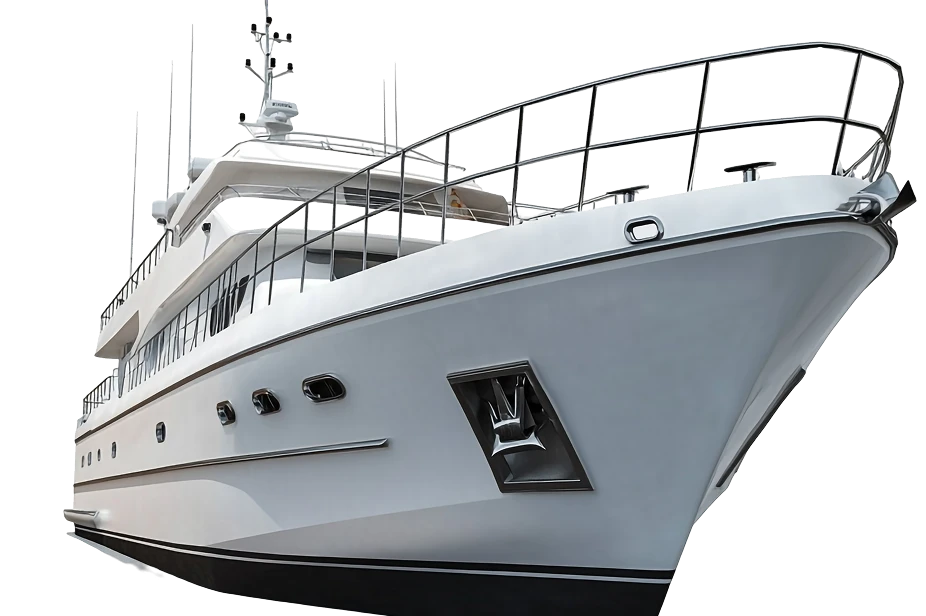
Superyacht Deckhand Essentials Package
Minimal skill set you need to start working as a deckhand. Includes STCW
10 Days
14 SEP 2026
This legal requirement for marine radio operation is more than a checkbox. It shows you’re trusted with safety communication, emergency procedures, and vessel coordination. Required for any role involving tender ops, watchkeeping, or bridge communication, and often requested in entry-level crew job ads.
Learn distress, urgency, and safety call formats using both voice and Digital Selective Calling (DSC), following GMDSS procedures.
Understand how to set up and operate fixed and handheld VHF sets, including dual-watch, scanning, and weather channels.
Practice handling real-life situations such as man-overboard reports, port authority communication, and bridge-to-tender coordination.
16 years old
A good level of spoken and written English is required, as all training and assessments are conducted in English
The VHF (SRC) course is a marine radio communications course delivered by International Yacht Training.
It trains candidates to legally and correctly operate marine VHF radios, including distress, urgency, and routine communications using internationally recognised procedures.
SRC stands for Short Range Certificate.
It is the internationally recognised qualification required to operate marine VHF radios with DSC (Digital Selective Calling) within VHF range.
A VHF (SRC) certificate is required for:
On many yachts, at least one certified VHF operator is mandatory.
Yes, in practice.
STCW does not certify radio operation.
If you are expected to use the vessel’s VHF radio, a separate VHF (SRC) certificate is required.
The course covers:
The focus is on accuracy, clarity, and compliance.
Yes.
Candidates must:
The practical assessment is conducted during the course.
The certificate is issued only after successful completion of both.
The VHF (SRC) certificate is valid for 5 years.
Important clarification:
This aligns IYT certification with modern international standards.